
Client
KSA
UX UI Design
Industry
Government
Date
Jan 2025
WDS isn't just an event website,
it's a strategic platform.
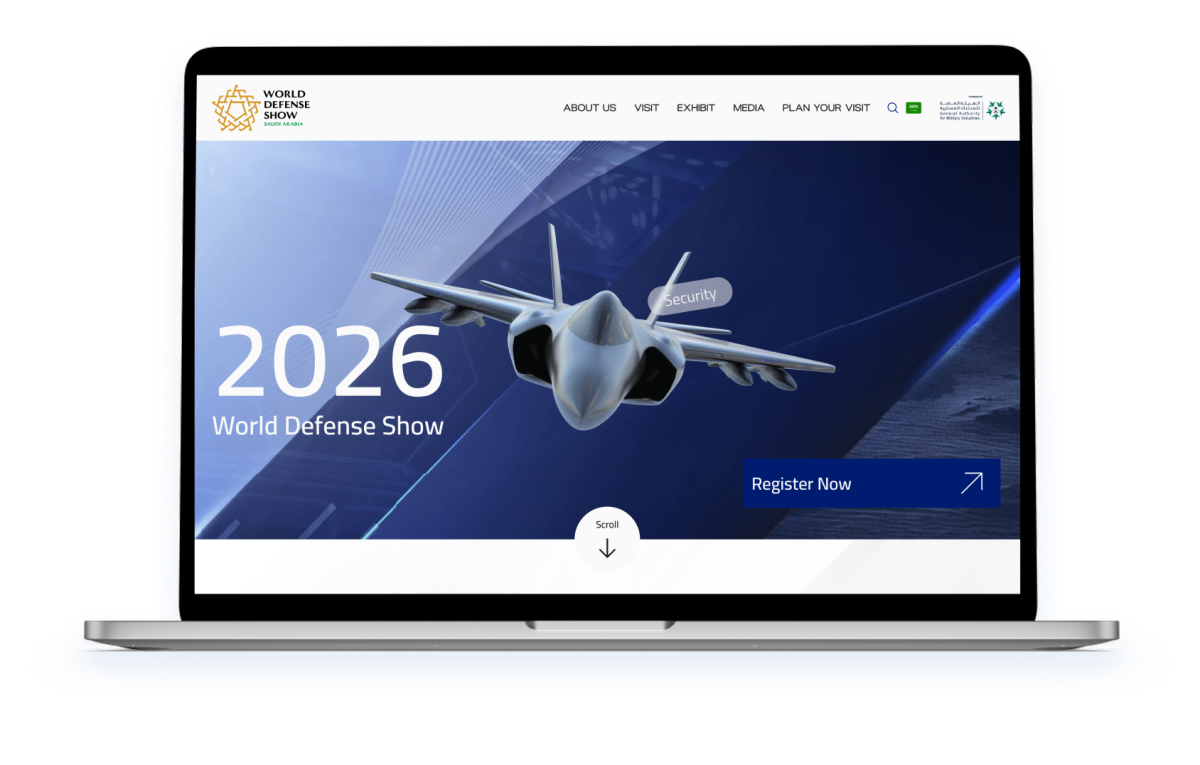
Discover
Understanding the problem space and aligning early direction
The World Defense Show presents a UX challenge rare in scale and complexity. Three completely different user types, Visitors, Exhibitors, and Sponsors, share the same digital platform but have fundamentally different goals, timelines, and information needs. A solution built for one group would fail the other two.The discovery phase mapped these user journeys across three exhibition stages, Pre-exhibition, During, and Post-exhibition, to understand where the platform needed to serve each group, and where the experiences diverge.
Three journeys, one platform
Visitors browse and plan. Exhibitors register and showcase. Sponsors negotiate and activate. Each group enters at a different point and needs completely different content surfaced first
Phase shapes content
What a Visitor needs Pre-exhibition is entirely different from what they need During or Post. Static page hierarchies fail this model — the platform must adapt to when, not just who.
Authority is the primary UI signal
The WDS audience includes defense ministers and C-level executives. The visual language must signal institutional authority — not the playfulness of a consumer event platform."
Discovery highlights
Emphatize
Understanding three mindsets attending the same event
Three user personas, Visitor, Exhibitor, and Sponsor, were developed through research and stakeholder alignment. Each persona carries a distinct mindset, set of motivations, behaviors across the three exhibition stages, and specific needs the platform must address.The journey mapping phase revealed that the platform needed to serve radically different goals simultaneously — from a defence official planning bilateral meetings weeks in advance, to a sponsor tracking ROI metrics after the event closes.
Mindsets
A closer look at key user groups to understand why users behave as they do.
Visitor
Attends to discover, connect, and stay ahead of the global defense landscape.

Exhibitor
Showcases products and capabilities to generate leads and close strategic deals.

Sponsor
Invests in visibility and brand authority among the world's top defense decision-makers.

Government
Engages for bilateral meetings, procurement intelligence, and strategic positioning.
Define
Turning insights into an information architecture
rom the persona research emerged a clear structural challenge: the platform needed a single navigation system that could surface radically different content to three different user types. The information architecture had to be flexible enough to serve all three journeys without creating a confusing, cluttered hierarchy.The IA defined the core user flows, Registration, Homepage, Programme, Page Info, Agenda Control, Exhibit, Sponsor, and Ground Transportation, and mapped the decision points unique to each persona across each journey stage.
From signals to themes
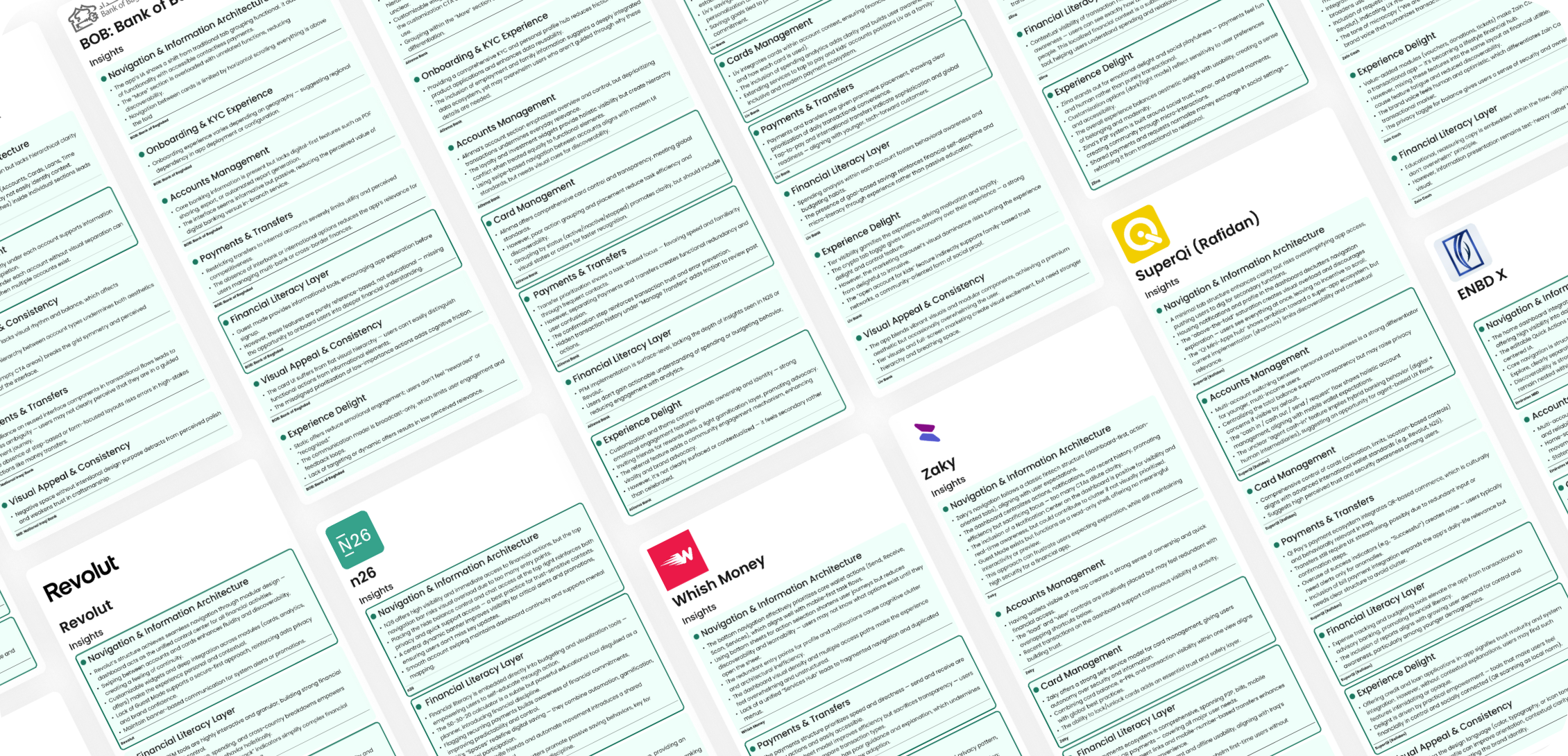
What we uncovered
8 core user flows identified
Registration, Homepage, Programme, Page Info, Agenda Control, Exhibit, Sponsor, and Ground Transportation — each mapped against all three persona types and all three exhibition stages.
Persona-conditional content
The same page serves different content depending on who is viewing it. An Exhibitor viewing the Homepage sees registration CTAs; a Visitor sees the programme. One URL, three experiences.
Time shapes content
What the platform surfaces changes based on exhibition phase — Pre, During, and Post. The IA accounts for this temporal dimension, not just the user type dimension.
Ideate
Designing for user thinking, not content categories
The journey maps translated persona insights into specific desired behaviors at each stage of the exhibition. Rather than designing pages around what the organisation wanted to publish, every screen was designed around what each persona was trying to accomplish at that specific moment.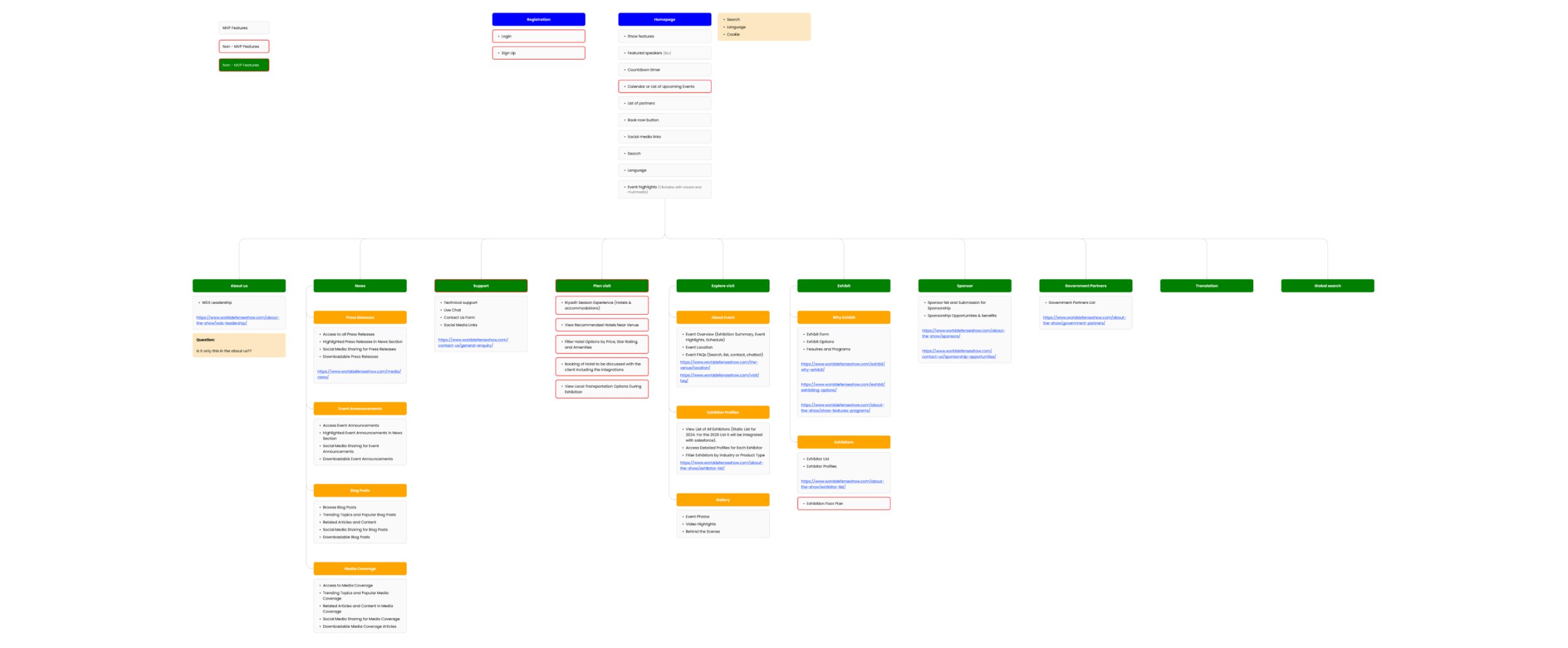
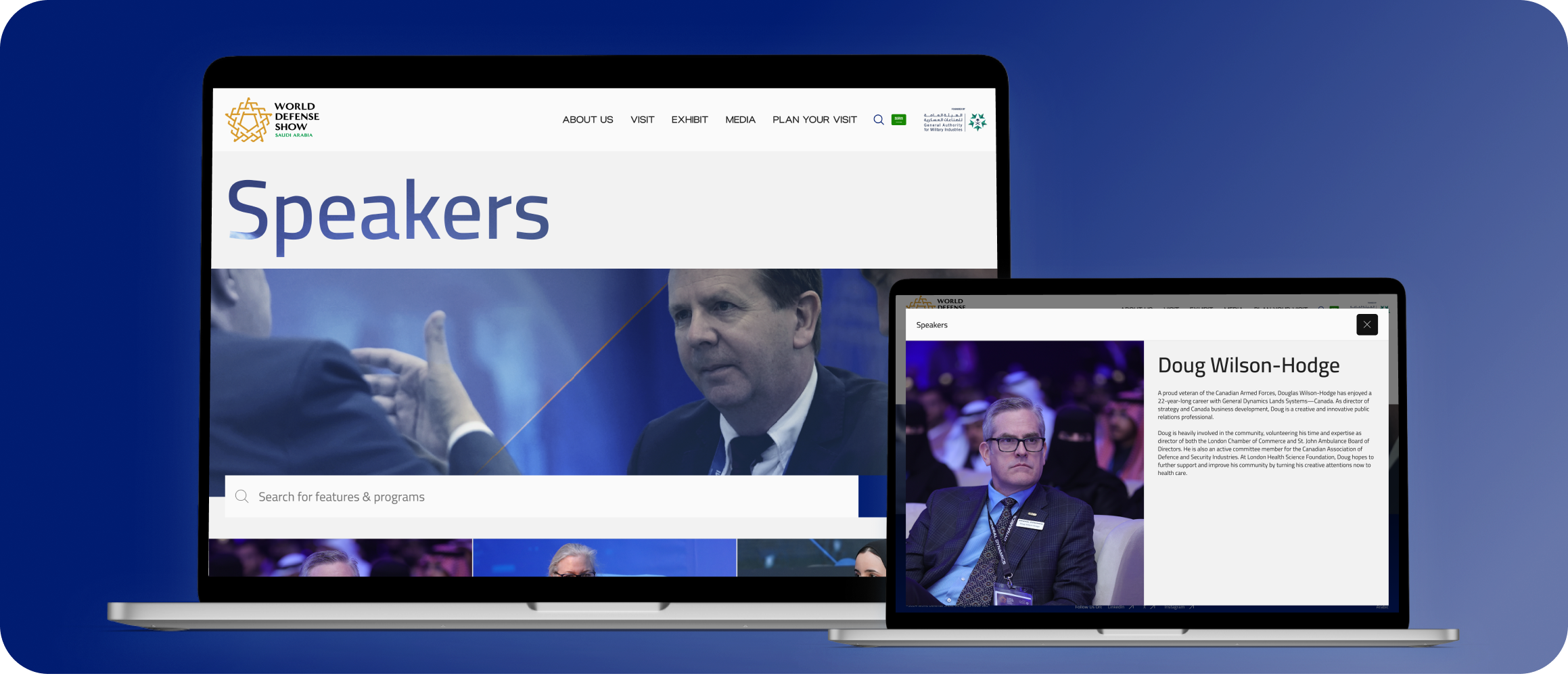
Design System
A visual language built for institutional authority
The WDS design system needed to communicate at the level of its audience — defense ministers, procurement officials, and C-suite executives. Deep navy anchors every surface. Royal blue drives interaction. Gold signals priority. Green confirms action. Together they build a system that is precise, authoritative, and unmistakably military-grade.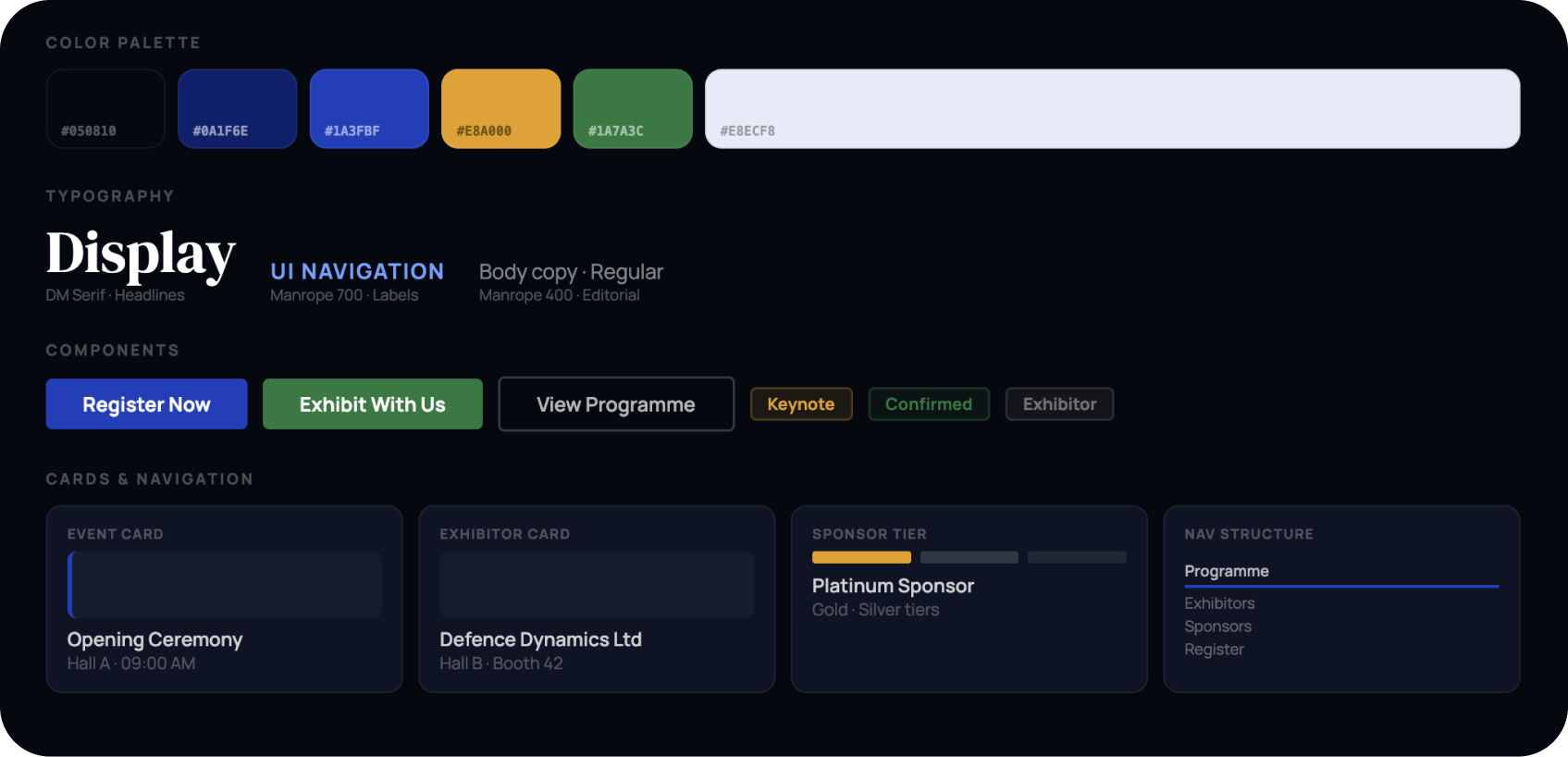
Navy signals authority
Deep #050810 — the color of military dress uniforms and defense letterheads. Every surface communicates credibility before a single word is read
Gold for priority, green for action
Gold highlights keynote speakers, platinum sponsors, and critical CTAs. Green confirms registration and positive states — two colors, two distinct jobs, no overlap.
Grid handles complexity
The site carries programme schedules, exhibitor directories, and sponsor packages simultaneously. A strict grid system keeps the information dense but never cluttered
Prototype
Designing the digital platform from the ground up
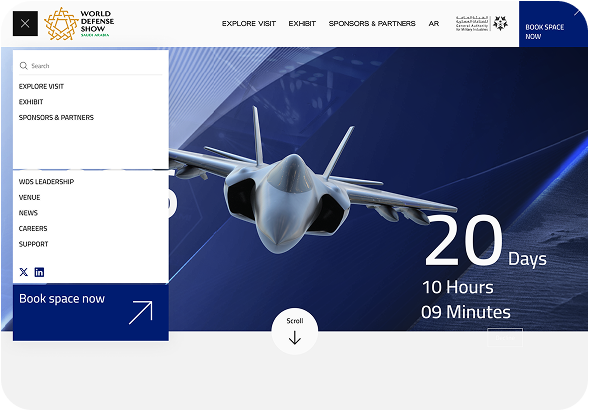
The website needed to function simultaneously as a marketing platform, an operational tool for registered users, and a post-event archive. Each section was designed with a specific persona and journey stage in mind — never as a generic page in a hierarchy, but as a purposeful moment in a user’s specific goal. Dark navy surfaces with white editorial content, gold highlight accents, and sharp typographic hierarchy give every page a premium, authoritative feel consistent with the scale and seriousness of the event.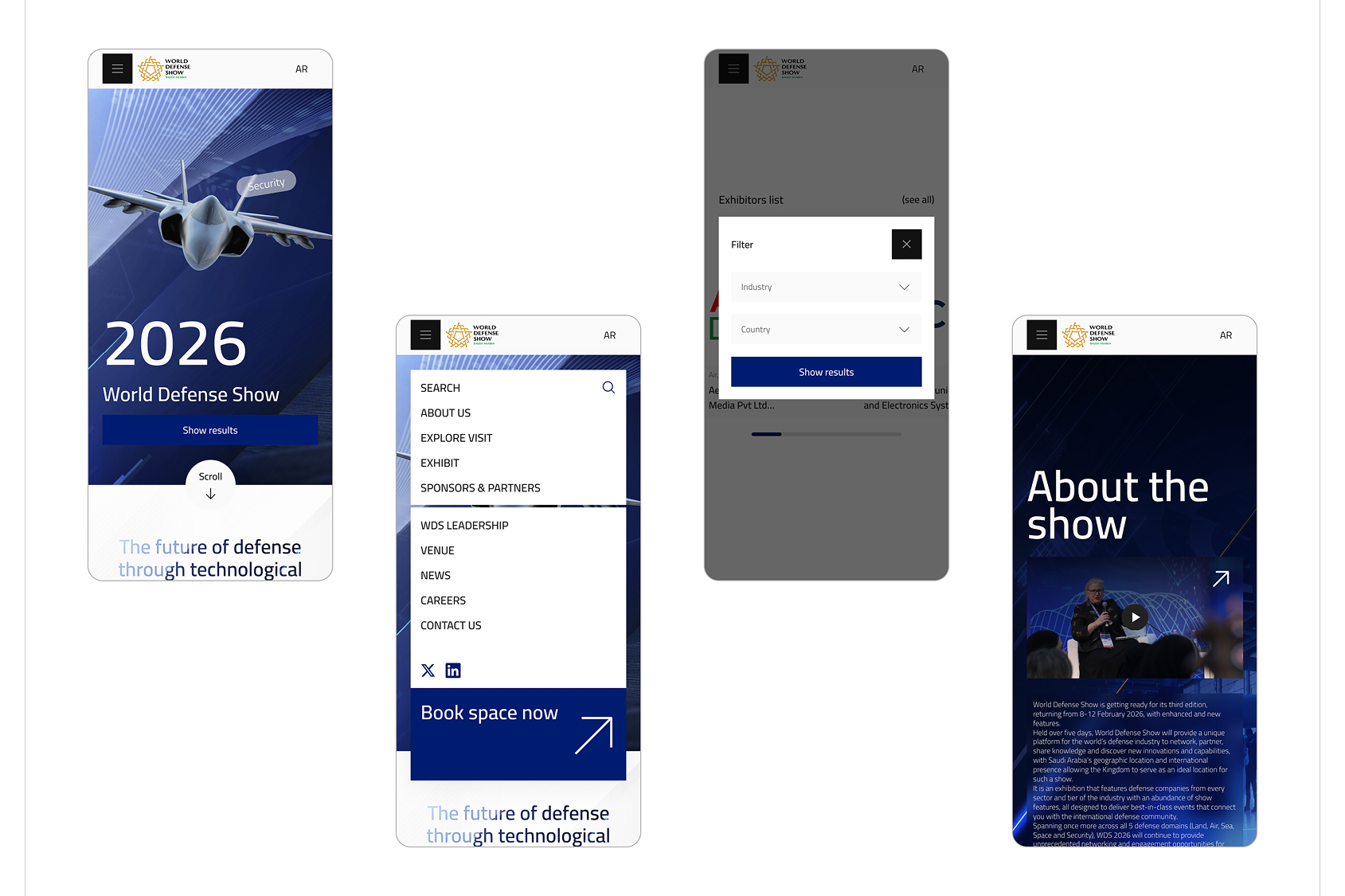
Delivery
One platform serving three user types across three phases.
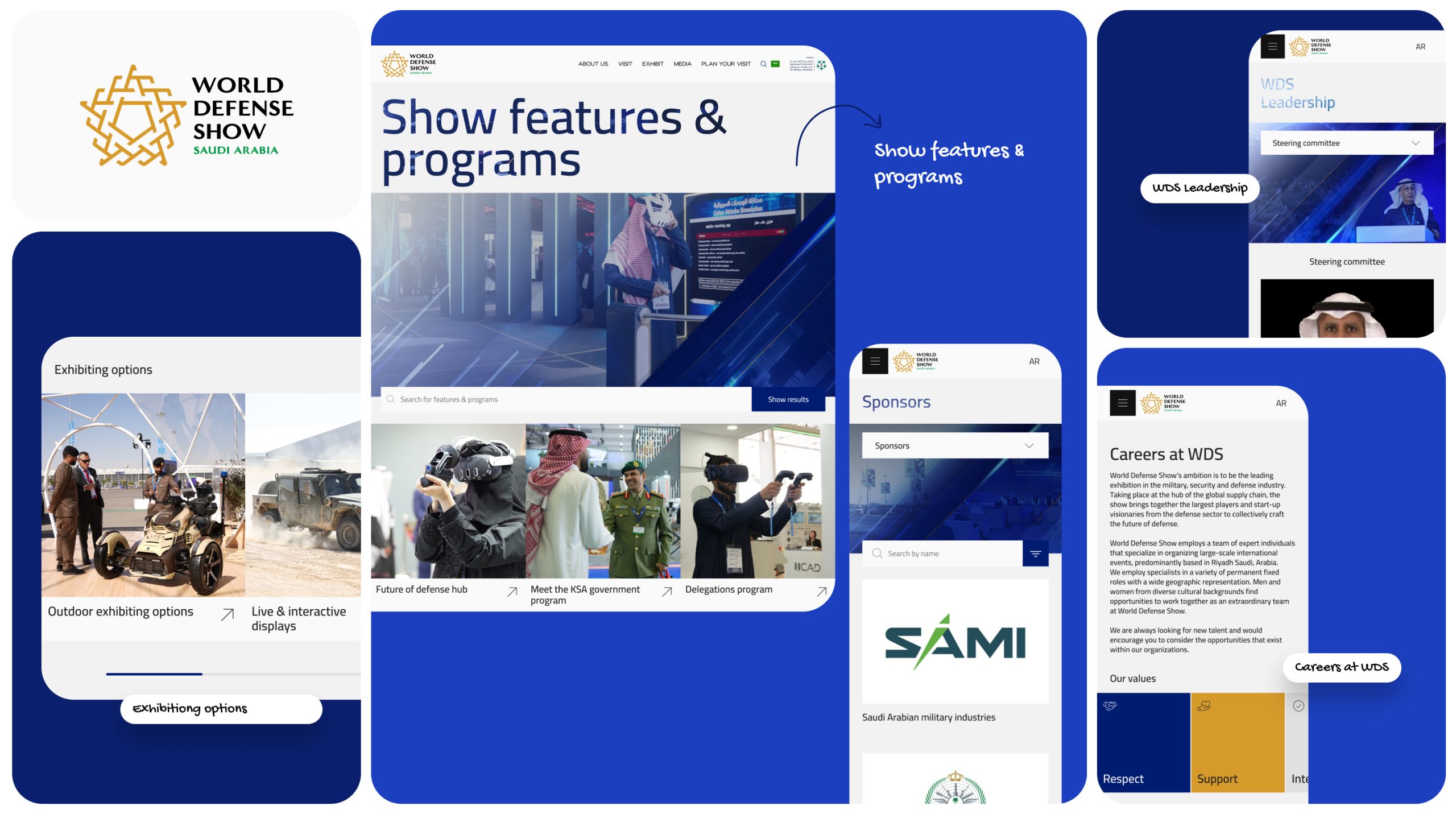
The World Defense Show digital platform launched as a fully designed website — a single system serving Visitors, Exhibitors, and Sponsors across the Pre-exhibition, During, and Post-exhibition phases. Grounded in research, shaped by journey mapping, and built on a design system calibrated for institutional authority.- 3 User personas mapped
- 3 Exhibition phases designed
- 20+Website screens delivered
- 01 Unified design system
The approach
The World Defense Show is not a consumer product — it is a strategic instrument for the global defense industry. Designing it required understanding the professional context, motivations, and information needs of three very different user types, then building a single digital platform that serves all three without compromise.
01
Mapped three journeys simultaneously
Visitor, Exhibitor, and Sponsor personas were developed in parallel; each with distinct attitudes, motivations, journey stages, and desired behaviors. The IA was built to serve all three from a single entry point.
02
Designed for temporal complexity
The platform serves different purposes Pre-exhibition, During, and Post. Rather than designing static pages, every screen was designed for a specific user in a specific time context — making the platform dynamic by design, not by engineering.
03
Built a system that signals authority
Deep navy, royal blue, gold, and sharp editorial typography. Every token in the design system was calibrated for an audience that judges credibility on first impression — and makes billion-dollar procurement decisions based on that judgment.
What we learned
One platform, three front doors
A homepage serving everyone equally serves no one. WDS was designed with three clear CTA tracks — Visit, Exhibit, Sponsor — so every user self-selects their path immediately
Time is a design dimension
What a Visitor needs before the event is completely different from what they need on the show floor. The exhibition phase is as important as the persona
Authority is a UX requirement
When users are defense ministers and procurement officials, visual language must earn trust before content is read. Design quality is itself a trust signal for this audience
